CBT is based on the idea that our thoughts, behaviours, physical sensations and feelings are all linked and affect each other. It is a highly effective approach and the recommended treatment for depression and anxiety disorders in the NICE guidelines (these are the national guidelines that inform the NHS about the most effective treatments for all physical and mental health problems). This diagram illustrates the basic CBT model, although there are numerous CBT models for different problems:
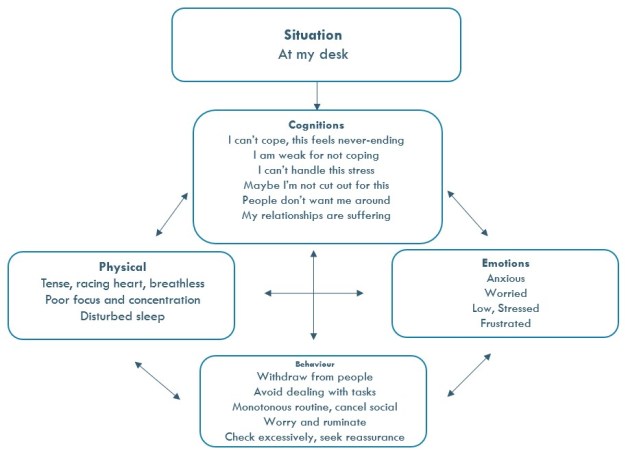
CBT allows the client to explore how their feelings may be influenced by their current thinking style and patterns and how this then affects their behaviour and responses. (behaviour). The approach also allows people to uncover and change unhelpful and longstanding beliefs which may be impeding their quality of life and happiness. It is a time-limited approach during which you will learn and practice techniques to gain control over thinking processes and problematic behaviours so that you then have the coping mechanisms to overcome your difficulties and manage your mood.
CBC (Cognitive Behavioural Coaching)
CBC is the coaching model derived from the CBT model, sharing the same premise that our thoughts, feelings, behaviours and physical sensations are all connected and affecting each other all the time. The CBC model focusses more on common professional issues and how thoughts may undermine or enhance performance and resilience. Using similar evidence-based techniques to the CBT model, CBC is an evidence-based and highly effective coaching modality.
EMDR (Eye Movement Desensitisation & Reprocessing)
EMDR is well known as an evidence-based treatment for PTSD and has been widely used across the world with people who have experienced trauma. It is also recognised as an effective treatment for most other psychological problems including anxiety disorders, depression, low self esteem, addictions, relationship problems and numerous others. EMDR is also highly effective in coaching, helping people to reprocess emotional blocks to performance and resilience.
EMDR is based on the theory that unprocessed and distressing memories from the past underpin current distress and drive emotional reactions which we may recognise are disproportionate in our current lives, but feel unable to resolve. It is particularly effective at targeting such strong emotional reactions and can be used in tandem with CBT.
 Dr Laura Haigh Psychology & Coaching